In the fast-paced logistics landscape, the choice of trailer can significantly impact operational outcomes. Whether it’s moving construction equipment, perishable foods, or industrial fluids, the right trailers enable carriers to address unique cargo demands with precision and efficiency. Strategic trailer selection saves time, safeguards cargo, and reduces overall transport costs—making it a critical aspect for businesses of every scale. The modern supply chain is more complex than ever, with companies handling a diverse range of cargo types and responding to rapidly changing consumer demands. In this landscape, an optimized trailer fleet is a significant business asset, one that affects everything from delivery speed to customer satisfaction and environmental compliance.
Logistics professionals must consider cargo type, safety requirements, timing, road regulations, and cost factors when choosing trailers for shipments. As freight volumes and retail expectations evolve, trailer innovation and versatility are crucial. Modern trailers enhance fuel efficiency, safety, and cargo protection through advanced telematics, GPS tracking, and real-time cargo monitoring systems. Staying updated on trailer design helps businesses adapt to regulatory changes and market expectations, providing a competitive advantage.
To further streamline their fleets, many companies are exploring new trailer sales that offer advanced safety features, lightweight materials, and telematics integration—all designed to increase productivity while complying with an ever-changing regulatory landscape. Choosing modern trailers can also lower fuel consumption and maintenance costs, helping firms meet sustainability goals while delivering superior service to customers nationwide.
Flatbed Trailers: Versatility in Transport
Flatbed trailers set the standard for adaptable freight transport. Their open framework allows loading from any angle and supports cargo that exceeds traditional trailer size limitations, giving them unmatched flexibility. This capability is essential for industries such as construction, agriculture, and manufacturing, where loads like steel beams, lumber, and large machinery are commonplace. The absence of fixed walls or a roof means that loads that are unusually wide, tall, or long can be easily accommodated without requiring specialized equipment or time-consuming modifications. Minimal restrictions on cargo dimensions help reduce downtime and boost fleet efficiency, making flatbeds irreplaceable for many operators. Additionally, flatbed trailers are ideal for transporting materials that require quick loading or unloading with cranes or forklifts. Their ability to handle irregularly shaped freight further reduces logistical bottlenecks, ensuring project timelines are met with fewer delays and less wasted labor.
Refrigerated Trailers: Keeping It Cool
When temperature-sensitive products require reliable transportation, refrigerated trailers—often referred to as “reefers”—offer climate-controlled environments that ensure product integrity. These trailers are key for food, medical supplies, and floral shipments, especially over long distances. Their insulated walls and powerful refrigeration systems maintain precise temperature ranges required to keep items such as dairy, seafood, produce, or pharmaceuticals safe from spoilage. Modern refrigeration units can be programmed for precise temperature ranges, greatly reducing the risk of spoilage or waste. The ability to track and log temperature data in real-time also supports accountability and quality assurance throughout the journey. Advanced technology keeps supply chains compliant with food safety regulations, ensuring perishables arrive as fresh as when they left the origin. Refrigerated trailers also support a variety of temperature profiles within a single trip if equipped with bulkheads, providing versatility for mixed loads and expanding market opportunities for carriers.
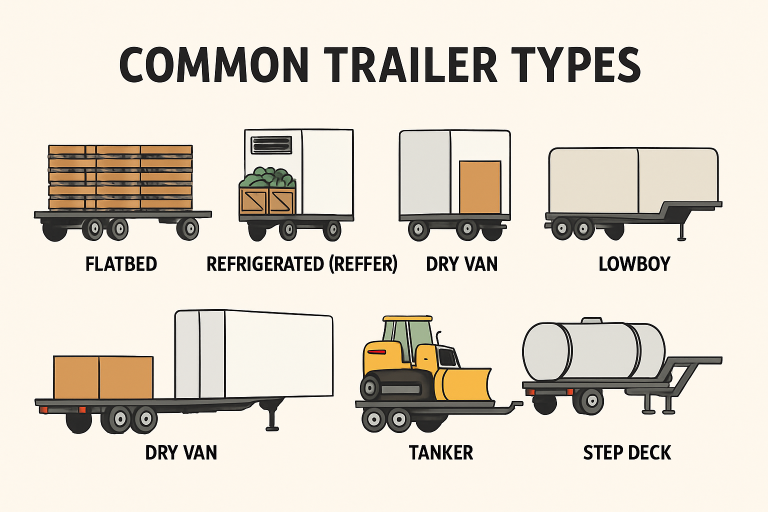
Dry Van Trailers: The Standard Bearer
As the most common trailer type in North America, dry van trailers are enclosed units ideal for protecting goods from weather and theft. They serve a broad range of industries by transporting packaged goods, consumer electronics, apparel, and palletized freight. Dry vans offer a naturally secure environment, safeguarding cargo from unauthorized access, rain, dust, and debris. Logistics providers favor dry vans for their compatibility with dock loading systems, which simplifies cargo management and speeds up turnaround at warehouses and distribution centers. The secure, enclosed structure is also a primary driver for retailers and manufacturers seeking safe point-to-point delivery for high-value or sensitive shipments. Their standardized sizes make fleet planning and load consolidation easier, allowing for maximum fill rates and cost-efficiency across shipping operations.
Lowboy Trailers: Handling Heavyweights
Lowboy trailers feature an exceptionally low deck height, making them ideal for hauling heavy and tall machinery, such as excavators, bulldozers, and industrial generators. Their design enables the transportation of oversized cargo legally, without requiring excessive permits, even on highways with strict clearance restrictions. This makes lowboys indispensable for construction, mining, and large infrastructure projects where moving equipment is a regular need. Due to their lower center of gravity, these trailers offer enhanced stability and load capacity, which minimizes the risk during long hauls. Their robust construction can withstand severe loads while ensuring safety for both the equipment and other vehicles on the road. In many cases, the use of lowboy trailers can mean the difference between a project staying on schedule or facing critical delays due to transportation setbacks.
Tanker Trailers: Liquid Assets
When tasked with transporting liquids or gases, tanker trailers are utilized. Their cylindrical design and specialty materials provide safe containment for a wide range of materials, including petroleum, food-grade oils, and hazardous chemicals. Tankers are typically crafted from stainless steel, aluminum, or specialized composites to resist corrosion and meet stringent federal regulations that guide tanker construction, inspection, and handling to prevent leaks and accidents. Such measures are crucial for ensuring public safety and environmental health, particularly when transporting hazardous materials. Tankers are a vital, regulated component of the energy and agricultural supply chains, enabling the efficient movement of bulk liquids across states and regions. Their designs often include multiple compartments for transporting more than one product at a time, enhancing logistical flexibility and reducing empty miles on return trips.
Step Deck Trailers: Accommodating Tall Cargo
Step deck (or drop deck) trailers provide a unique solution for cargo that exceeds standard dry van height limits. With a lower deck behind the tractor and a slightly raised front section, they safely accommodate tall machinery, vehicles, or building materials while staying within legal roadway height restrictions. The design eliminates the need for costly over-height permits in many cases, significantly lowering operational expenses. Ideal for manufacturers and distributors of agricultural or industrial equipment, step decks help expand the types of freight a fleet can carry, all while complying with transportation laws. Their versatility also comes into play when multiple pieces of equipment or materials need to be stacked or loaded in innovative ways, solving space and clearance challenges with ease.
Conclusion
The modern logistics landscape demands more than just reliable vehicles—it requires specialization and adaptability at every level. Each trailer type, from flatbeds to refrigerated units, brings distinct advantages that contribute to safe, cost-effective, and timely cargo delivery. By understanding and leveraging the unique benefits of each trailer, logistics companies can streamline their operations, enhance customer satisfaction, and maintain a competitive edge in an ever-evolving marketplace. As regulatory demands and industry trends continue to shift, the value of a well-chosen, well-maintained trailer fleet will only grow, anchoring successful logistics strategies for years to come.