
Introduction
The modern automotive industry faces a growing responsibility to manage the mounting problem of end-of-life vehicles. As car ownership surges globally, so does the need for environmentally conscious practices that limit landfill waste and preserve resources. Among the most effective strategies are improvements in recycling and the creative reuse of car materials—approaches that not only support sustainability but also encourage innovation across communities and businesses. Connecting with your local Salvage yard is one direct way for individuals to ensure unwanted vehicles and parts get a new life, benefiting both the planet and the economy. From artist collectives transforming scrap into bespoke furniture to advanced shredding systems maximizing material recovery, the spectrum of vehicle recycling opportunities continues to expand. Communities are launching increasingly convenient programs—from specialized drop-off bins to public events—aimed at responsibly collecting auto waste and raising recycling awareness. This shift towards creativity and invention in waste management doesn’t stop at recycling facilities. Manufacturers are rolling out take-back systems to reclaim, refurbish, or recycle used vehicles and components, fostering a circular-economy mentality within the industry. Combined with grassroots DIY projects at home, these initiatives illustrate how every stakeholder, from businesses to individuals, can make a difference.
For those seeking budget-friendly options, many salvage yards and auto dismantlers now offer high-quality Auto Parts For Sale, helping ensure parts are reused rather than sent to a landfill. This not only saves money but also further reduces the environmental footprint of vehicle maintenance and repair.
The latest advancements in vehicle recycling technology are transforming how we manage auto waste. Modern recycling plants use sophisticated shredders and separation systems that efficiently sort metals, plastics, glass, and advanced composites with remarkable accuracy. This has improved recovery rates, ensuring fewer materials are wasted, and more can be repurposed for new manufacturing cycles. Beyond physical separation, chemical recycling enables the breakdown and reuse of previously non-recyclable automotive plastics. These cutting-edge chemical processes turn end-of-life vehicle components into raw materials that are reintegrated into the production chain, marking a significant step towards resource preservation.
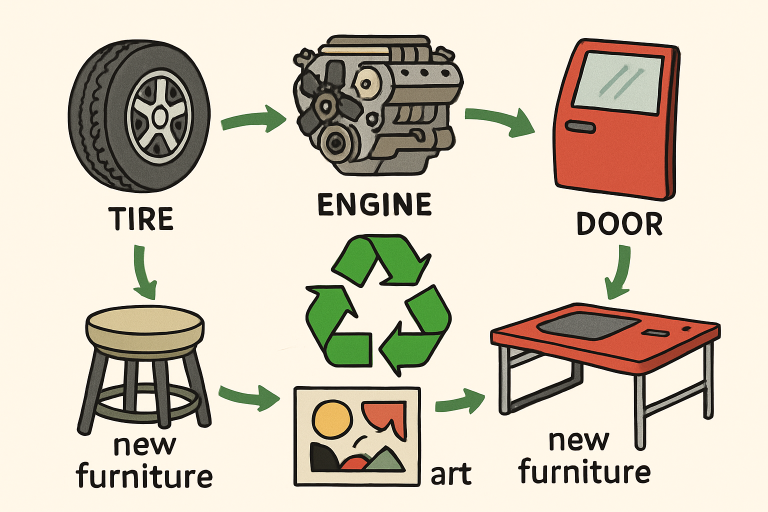
Upcycling Car Parts into Art and Furniture
Salvaged vehicle parts provide a playground for creativity, both in art and practical design. Turning an engine block into a coffee table or a set of gears into wall decor doesn’t just avoid adding to landfills; it also brings unique character to homes and offices. The trend of upcycling car components now attracts professional artists and hobbyists alike, fueling local economies and drawing attention to the possibilities of creative reuse.
Public sculptures, reimagined furniture, and even functional lighting fixtures made from old car parts are now seen as symbolic statements of environmental responsibility. This movement, celebrated by design communities worldwide, has also helped broaden the public’s understanding of waste as a resource for artistic and practical innovation.
Community Recycling Initiatives
Local governments and grassroots organizations play an essential role in promoting sustainable car recycling. In various cities, tailored programs help citizens dispose of old car batteries, tires, oil, and other auto waste safely. For example, San Francisco’s smart drop-off bins address the collection of mixed lithium-ion batteries and electronic automotive components, mitigating fire risks and preventing hazardous materials from entering landfills.
These initiatives often rely on collaborations with recycling companies, educational campaigns, and incentives for proper disposal. According to the U.S. Environmental Protection Agency, community involvement is fundamental to the success of any auto recycling program, demonstrating the power of collective action in tackling a complex environmental challenge.
Implementing Take-Back Systems
Take-back systems require manufacturers to accept responsibility for reclaiming used automotive products—ensuring that vehicles and parts are recycled, remanufactured, or disposed of responsibly. This model encourages companies to design for recyclability and durability, benefiting the environment while strengthening brand reputation and customer satisfaction.
Automakers participating in take-back programs help create a circular ecosystem by feeding reclaimed materials back into production streams and reducing reliance on raw materials. As sustainability regulations become more robust, such systems are expected to become standard practice across the global automotive sector.
DIY Projects: Reusing Car Parts at Home
Individuals can make a meaningful impact through creative DIY projects that upcycle old car parts. Used tires fashioned into sturdy planters or backyard swings, tailpipes reinvented as unique lamp bases, and windshield glass reused in home art projects are just a few of the inventive ways people are extending the lifespans of materials.
These hands-on innovations not only cut down waste but also empower people to personalize their living spaces with one-of-a-kind, conversation-starting pieces. Popular DIY forums and social media channels are brimming with inspiration for beginners looking to turn scrap into style.
Advancements in Battery Recycling
The rapid rise of electric and hybrid vehicles brings new waste-management challenges, particularly in the recycling of lithium-ion batteries. Advanced facilities recovering precious metals like lithium, cobalt, and nickel from spent batteries help reduce environmental risks and promote a more sustainable supply chain for the next generation of electric vehicles. This progress in battery recycling not only reduces hazardous waste but also supports efforts to close the materials loop and meet the rising demand for rare resources critical to clean energy solutions.
Conclusion
Addressing vehicle waste and supporting car recycling depend on adopting a multi-faceted, collaborative approach. Whether through embracing state-of-the-art recycling plants, participating in community programs, supporting take-back schemes, or trying your hand at creative DIY projects, everyone can help forge a more sustainable future for the automotive industry. By combining innovation, engagement, and environmental stewardship, we can pave the way for resource conservation and long-lasting positive change for communities and the planet.